Skip to content
  • Written quotes
  • Local electricians
Reading, Berkshire 01632 960071
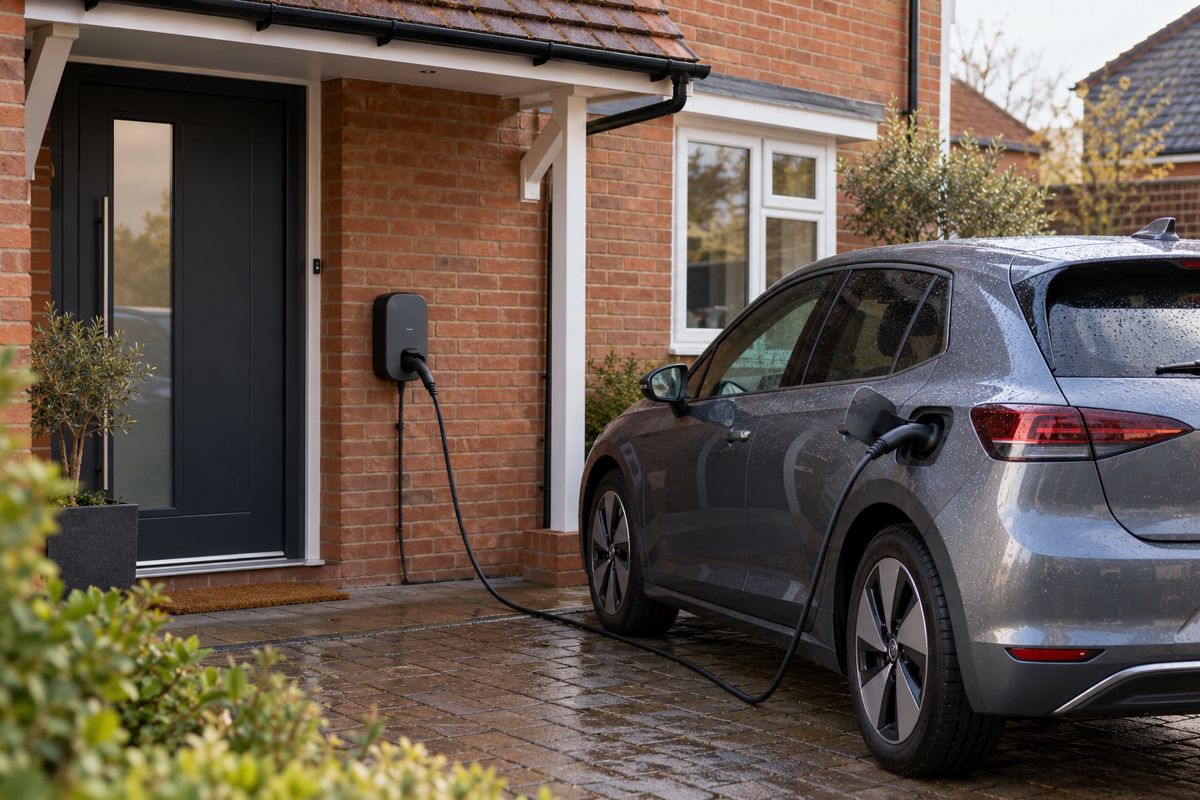
Wall-mounted EV charger on a brick semi with a car charging on the drive

Home charge points in Reading

EV charger installation in Reading for houses and driveways

A home charge point on its own protected circuit, fitted to suit your car, your wall and your parking. We look first and quote in writing.

  • Suits most plug-in cars, Teslas included
  • Supply, earthing and consumer unit checked first
  • Clear explanation of paperwork and smart rules

Step 1 of 3

What do you need?

What does an EV charger installation involve?

For ev charger installation Reading drivers usually want a wall-mounted unit on the home's single phase supply, with a rating of around 7kW. In the US, charging at this level is called Level 2, but that is not the term used here. In the UK it is simply a home charge point.

The work covers a survey, a dedicated circuit from the consumer unit, a suitably rated cable, a protective device, the charger itself and testing. Most plug-in cars sold in the UK, Teslas included, use the same Type 2 connector, so one charger fits almost every vehicle. You can choose a tethered unit with a fixed cable, or a socketed one where you plug in your own lead.

What can go wrong with chargers at Reading homes?

Many Reading streets are lined with Victorian and Edwardian terraces that have no driveway. A cable across a pavement is a trip hazard and is not allowed, so some people look at on-street charging or a nearby private space. Councils run schemes in some places, but availability changes, so check locally.

If you rent or live in a flat, you will need permission from your landlord or freeholder before anything is fixed to a wall. Electrical issues also arise. Older homes may have supply earthing that needs extra measures, and a full or ageing consumer unit may need replacing first. A survey visit sorts out all of this before you buy a charger.

Which rules and paperwork apply to a home charger?

Home charge points in Great Britain must meet smart charging rules. In practice that means chargers sold for homes have to be able to connect, follow charging schedules and pause at peak times. Installers also usually notify the local network operator, and the work counts as electrical installation work that needs a certificate.

Government grants for chargers have been aimed at certain groups, such as flat owners, renters and landlords, and the rules change from time to time. Check the current rules on the government website before you rely on one. As advice to you, ask any installer which scheme they register with and check it yourself. Our home page explains how we handle quotes and paperwork.

We do not give prices without seeing the property. These are the main factors:

  • The distance from the consumer unit to the chosen spot.
  • The wall, which may be brick, render or something harder to drill through.
  • Whether the unit, earthing or supply needs work first.
  • The charger model, with or without a built-in meter or extra features.
  • Groundwork, if the charger goes at a detached garage or far side of the drive.

A simple fit on an outside wall near the unit can often be finished within a day. Longer cable runs, trenches or consumer unit changes can stretch that. Tell us about your car, your parking and the tariff you use, and we can plan around them.

What should you know before booking?

Decide where the car will park and which wall is closest. Check your energy supplier's options for cheaper overnight tariffs, because charging when electricity costs less can change running costs over a year. Think about weather as well. Reading gets a fair amount of rain, so a tethered unit with its cable protected from wet is easier to live with than a socketed one with a lead you keep in the boot.

On the day, we confirm the position, run the cable, mount the charger, test everything and show you how to use it. If you are unsure about wiring behind your walls, a rewire may be worth considering at the same time.

If you are buying a new car, it is worth arranging the survey before it arrives. That leaves time to sort out any consumer unit or earthing work, and to choose a charger with a cable length and finish that suit your wall, rather than rushing the job in the first week of ownership.

Written quotes Local electricians Fast response Tidy work

Questions about electrical in Reading

Do I need a driveway to have a home charger?

Usually you need off-street parking close to the property so the charger can be fixed to a wall or post and the cable never crosses a public pavement. Without that, look at council on-street schemes, workplace charging or public chargers. Ask your local council what is available, because schemes differ and change.

Will a charger fit my Tesla or another make?

Most plug-in cars sold in the UK, including Teslas, use a Type 2 connector, so a standard home charger works with almost all of them. A few older vehicles use a different connector, so check your handbook. If you have more than one car, a socketed unit with a Type 2 socket lets everyone bring their own cable.

Do I need permission from my landlord?

Yes, if you rent a house or a flat. A charger is fixed to the structure and connected to the electrical supply, so the owner must agree. In flats, the freeholder or management company may need to approve it too. Get permission in writing before booking any work.

Can I use a normal three-pin socket instead?

It is possible to charge from a standard socket in an emergency, but it is not recommended for regular use. Charging is slow, and the socket and cable carry a high load for hours, which can overheat old fittings. A dedicated charger on its own circuit is safer and quicker and is the sensible choice for daily charging.

How long will the visit take?

A simple installation on an outside wall near the consumer unit can often be finished in a day. Longer cable runs, groundwork or a consumer unit replacement take longer. We confirm the likely time in the written quote after the survey, so you can plan around work and school runs.

How it works

1

Call or request a quote

Tell us what is wrong or what you need.

2

Clear price

We explain the work and the cost before starting.

3

Safe, tidy work

Done properly, tested and cleaned up.

Request ev chargers

Tell us what you need and we call you back.

No obligation.

Step 1 of 3

What do you need?

Ready when you are Call now or request a quote online. Call an electrician Get my free electrical quote 01632 960071